
Principal Investigator
martin.reuter (at) dzne.de
Martin is the founder and director of the Deep-MI Lab, the AI in Medical Imaging Lab at the German Center for Neurodegenerative Diseases (DZNE) in Bonn, where he leads a team building AI methods to understand the aging and diseased brain from MRI, including FastSurfer, the lab’s award-winning open-source brain segmentation tool. He is also Professor of AI in Medical Imaging at the University of Bonn, and holds a joint appointment as Assistant Professor of Radiology and Neurology at Harvard Medical School and Massachusetts General Hospital. He is further affiliated with the Martinos Center for Biomedical Imaging and the MIT Computer Science and Artificial Intelligence Lab (CSAIL).
Martin studied mathematics and computer science at Leibniz University Hannover and earned his PhD in computational and differential geometry, where he developed ShapeDNA, an award-winning spectral approach to shape analysis. A Feodor Lynen Fellowship from the Alexander von Humboldt Foundation then brought him to MIT, where he continued to develop influential methods for non-rigid shape analysis and increasingly turned them toward medical applications. This path led him to MGH/Harvard Medical School in 2008, where he shifted his focus fully to medical image analysis, contributing methods for unbiased longitudinal processing of brain MRI and structural shape analysis for computer-aided diagnosis and prognosis, now widely used as part of the open-source FreeSurfer package to study neurodegeneration and assess disease-modifying therapies, e.g. by the Alzheimer’s Disease Neuroimaging Initiative and the Rhineland Study.
Following an NIH Career Award for his work on computational methods in medical imaging, Martin was appointed Assistant Professor of Radiology and of Neurology at Harvard Medical School in 2015, positions he still holds today. In 2016 he founded the Deep-MI Lab in Bonn, and in 2024 he obtained a professorship at the University of Bonn, continuing to build a team bridging computational geometry, deep learning, and clinical neuroscience.
Postdoc
santiago.estrada (at) dzne.de
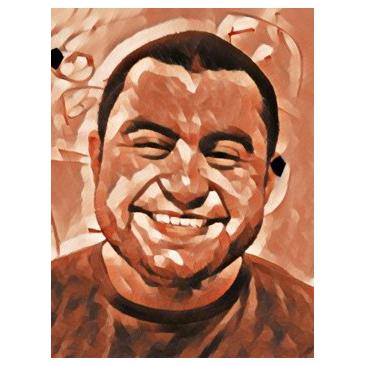
Santiago graduated from Technical University of Munich (TUM) with a degree in Biomedical Computing. His research focuses on the deployment of deep learning methods for quantifying imaging biomarkers in large cohort studies (e.g. Rhineland Study). When not at the lab, Santiago enjoys going to the movies and exploring the city.
Current projects:
Olfactory Bulb Segmentation, Localized Brain Age Prediction, Automated Tools for Retina Image Analysis
Postdoc
david.kuegler (at) dzne.de
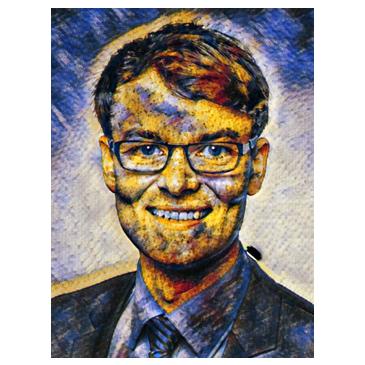
David focuses of Learning aspects for Artificial Intelligence in Medicine. He has a strong interest in developing next generation learning strategies for medical imaging with an intrinsic inclusion of geometry and modeling. At DZNE he supports students and PhDs with his Deep Learning and medical image processing experience. As an interdisciplinary researcher, David graduated from RWTH Aachen with a degree in mechanical engineering focusing on learning for control engineering in medical robotics. Since then he worked at the TU Darmstadt as a PhD bringing learning to Computer-Assisted Interventions. In specific his PhD thesis addresses image-guided and electromagnetic tracking for temporal bone surgery.
Current projects:
Geometry Reconstruction, Interpretability
Postdoc
clemens.pollak (at) dzne.de
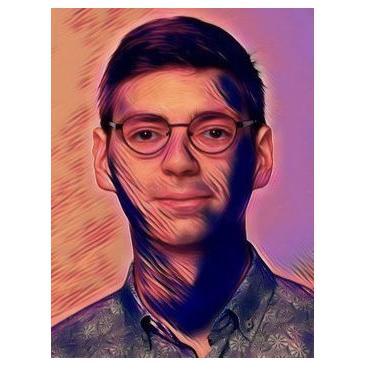
Clemens obtained his Master degree in Computer Science at Leibniz University Hanover. The reliability of quantitative neuroimaging is frequently compromised by image artifacts, anatomical pathologies, and biased standardization procedures, which disrupt standard automated analysis pipelines. Clemens has tackled these challenges in his doctoral thesis by creating strong computational frameworks for MRI analysis, with a focus on motion quantification and segmentation based on deep learning. His current research focuses on expanding these methods and bridging them to clinical applications.
Current projects:
Lesion robust brain segmentation, Corpus Callosum Morphometry, MR Head Motion Tracking
Research Associate
kersten.diers (at) dzne.de
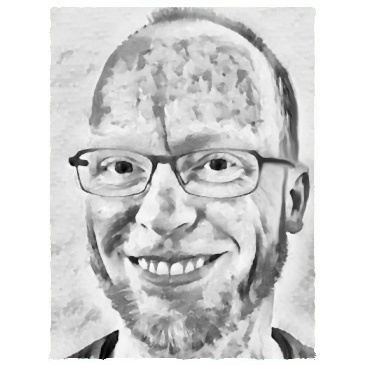
Kersten graduated from TU Dresden with a degree in Psychology and University of Heidelberg with a degree in Medical Biometry / Biostatistics. His work is at the intersection of applied methods development and empirical research, with a particular focus on shape analysis and statistical modeling of neuroimaging data.
Current projects:
Hippocampal Thickness Analysis, Shape Asymmetry, Harmonization, Quality Assessment, Bio-Statistics
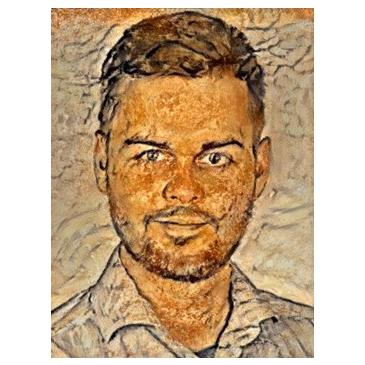
Research Associate
christian.ewert (at) dzne.de
Christian obtained his Master degree in Computer Science at University of Bonn. He is interested in Deep Learning and its potential to reveal hidden patterns and relationships in neuroimaging data. He explores ways to apply Deep Learning to accelerated image reconstruction and fiber-tracking in diffusion-weighted MRI.
Current projects:
Diffusion Processing, Fiber Tracking
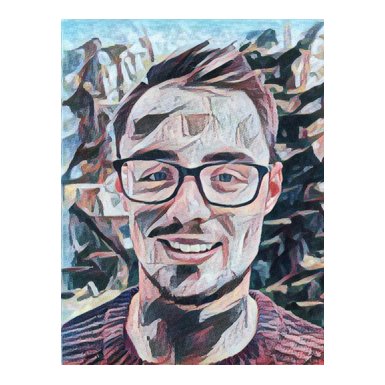
Research Associate
sebastian.rassmann (at) dzne.de
Sebastian has a multidisciplinary background, with Computer Science and Biomedicine degrees from Bonn University. He is interested in applying novel deep-learning methods to medical image analysis to aid patient care. He has previously worked on automating the analysis of microscopy and X-ray imagery. He develops generative AI models for medical image translation (e.g. FLAIR synthesis), with strong focus on maximizing information extractability rather than mere image appearance. Currently, his research also aims to translate the gained insights to (conditional) brain MRI denoising.
Current projects:
Medical image translation, Brain MRI denoising
 Deep-MI
Lab
Deep-MI
Lab ORCID
ORCID
 Scholar
 deepmi
 @deepmilab